The Ultimate Guide: What Actually Happens to Your Vehicle After You Send It to a Wrecker?
Published on March 31, 2026 | Category: Automotive Education & Recycling | By: Farzad Najib
Every vehicle has a lifespan. Whether it is a loyal family sedan that has finally succumbed to engine failure, a work utility vehicle that has seen one too many rough construction sites, or a car that has been written off after an unfortunate accident, there comes a time when repairs simply cost more than the vehicle is worth.
For many car owners, making the decision to let go of an old vehicle is the easy part. The confusing part is figuring out what to do next. If you have ever stared at a broken-down car in your driveway and wondered about its final destiny, you are not alone.
Contrary to popular belief, when you hand your keys over to a professional auto recycler, your vehicle does not just go to a massive, rusty landfill to be forgotten. Instead, it embarks on a highly organized, heavily regulated, and eco-friendly journey of recycling and repurposing.
In this comprehensive guide, we are pulling back the curtain on the auto dismantling industry to show you exactly what happens to your vehicle after it leaves your driveway, and why choosing the right disposal method is critical for both your wallet and the environment.
Phase 1: The Valuation and the Offer
The journey of an end-of-life vehicle begins long before the tow truck ever arrives. It starts with a valuation. When a car is no longer roadworthy, its value shifts from being a "drivable asset" to a "salvageable asset."
Licensed auto buyers calculate this new value by looking at three primary factors: the base weight of the scrap metal, the current global market price for steel and aluminum, and the local demand for the vehicle’s specific components.
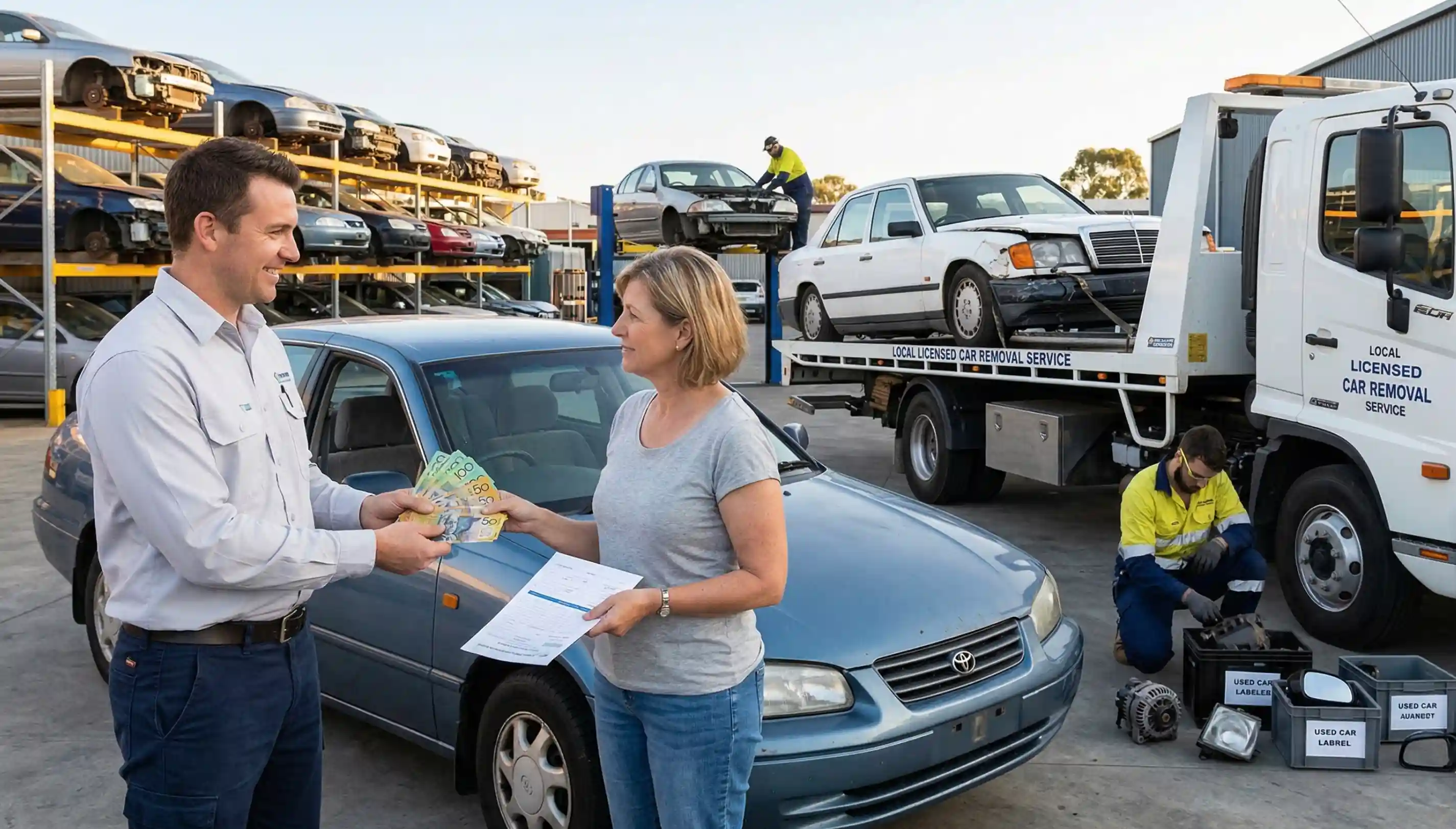
Instead of dealing with the endless headaches of private sales—such as writing classified ads, negotiating with lowballers, or paying for roadworthy certificates—car owners can utilize a professional cash for cars service. These services provide an immediate, data-driven quote based on the salvage value of the car. Because they harvest the materials directly, they are able to offer competitive payouts that put money directly into the hands of the seller, transforming a useless metal liability into an instant financial asset.
Phase 2: The Logistics of Transportation
One of the biggest hurdles car owners face is the logistics of transportation. If a vehicle has a blown transmission, no registration, or four flat tires, getting it to a salvage yard can seem like an expensive nightmare. Hiring an independent, private towing company can easily cost hundreds of dollars, which eats away at whatever profit you might make from scrapping the car.
Fortunately, the modern auto recycling industry has solved this problem. Reputable buyers include complimentary car removal as a standard part of their service.
Once an offer is accepted, a heavy-duty flatbed tow truck is dispatched directly to the vehicle's location. Whether the car is sinking into the mud in a backyard, parked in a tight suburban driveway, or sitting at a local mechanic's garage, professional drivers are equipped to extract it safely. During this phase, the driver will also assist with the necessary transfer paperwork to ensure the seller is legally absolved of the vehicle before towing it away to the wrecking facility.
Phase 3: Environmental Depollution and Safety
This is where the true environmental magic begins. When a vehicle arrives at a licensed auto recycling yard, it cannot simply be crushed. Cars are complex machines filled with highly toxic chemicals, heavy metals, and combustible fluids. If a car is left to rot in a field or improperly disposed of by an unlicensed scrap metal dealer, these hazardous materials can seep into the soil and severely contaminate the local groundwater supply.
Before any dismantling occurs, the vehicle undergoes a strict "depollution" process. Expert mechanics carefully drain and securely store all hazardous liquids. Engine oil, transmission fluid, and power steering fluid are safely extracted and sent to specialized refineries where they can be cleaned and reused in other industrial applications. Coolant and antifreeze are safely siphoned, and any remaining petrol or diesel is recovered for secondary use.
Additionally, the car's lead-acid battery is removed. While car batteries are incredibly toxic, they are also highly recyclable; nearly 99% of a standard car battery can be broken down to manufacture brand-new batteries.
Phase 4: Harvesting and Testing Genuine Components
Once the vehicle is completely drained, stabilized, and safe to handle, it moves into the dismantling bay. This step is vital to the automotive circular economy.
Even if a car has been declared a total loss due to a front-end collision, the rear components, interior seating, and internal electronics might be in pristine, perfect working order. Skilled technicians meticulously strip the vehicle of any usable car parts.
These salvaged components—which often include engines, alternators, starter motors, doors, side mirrors, and infotainment systems—are thoroughly inspected, cleaned, tested, and cataloged into a massive parts inventory.
By harvesting these genuine second-hand parts, auto wreckers provide a massive benefit to the community. Local mechanics, auto enthusiasts, and everyday drivers can purchase these recycled components for a fraction of the cost of buying them brand new from a dealership. More importantly, using recycled parts drastically reduces the massive carbon footprint and energy consumption associated with manufacturing new auto parts from scratch.
Phase 5: Crushing, Shredding, and the Rebirth of Metal
After all the valuable components and hazardous materials have been carefully extracted, what remains is essentially a hollow shell of steel, aluminum, and plastic.
To maximize space and transportation efficiency, this vehicle shell is fed into a massive industrial car crusher, which flattens the frame into a dense, compact cube. From here, the crushed cars are sent to a specialized shredding facility. Giant hammer mills tear the metal cubes into fist-sized chunks in a matter of seconds.
As these shredded pieces travel down a conveyor belt, powerful electromagnets separate the ferrous metals (like steel and iron) from the non-ferrous metals (like aluminum and copper) and non-metallic "fluff" (like plastics, rubber, and glass).
This heavily sorted, recycled scrap metal is then sold to global foundries and refineries. There, it is melted down in giant furnaces and rolled into new sheets of high-grade steel. The steel from an old, rusted commuter car could very well be recycled and reborn as a brand-new vehicle, a household appliance, or even the structural steel beams of a modern skyscraper.
Making the Right Choice for Disposal
Understanding the lifecycle of a scrapped vehicle highlights just how important it is to dispose of unwanted cars responsibly. Letting an old vehicle rust away in a paddock is a waste of valuable resources and a danger to the environment.
By utilizing licensed, professional auto recyclers, car owners play a direct role in a massive, globally connected recycling supply chain. It is a rare, perfect scenario where doing the right thing for the environment also happens to be the most profitable and convenient choice for the consumer.
Looking to recycle an unwanted vehicle?
If you have an old, broken, or scrap car taking up space, do the right thing for your wallet and the environment. Call Vic Cash 4 Cars at 0469 934 580 or click below to get a free, no-obligation valuation today!
Get A Free Quote